
TEMM Workspace
An open-source workspace for connecting and managing multiple coding agents (Codex, Claude Code, Gemini CLI, OpenCode, Aider) in one interface with structured project plans and review gates
- Role
- Full-stack engineering & UI design
- Timeline
- 2026
- Platforms
- Windows · Web · Server
- 6 أدوات
- connected coding agents
- عربي / EN
- bilingual light & dark UI
- إدارة مشاريع
- task plans & review gates
- Open Source
- public on GitHub
Overview
Business problem & context
Engineering teams use multiple AI coding agents (Codex, Claude Code, Gemini CLI, Antigravity, OpenCode, Aider), yet each tool runs in an isolated terminal without a unified project plan, permission approval gates or verifiable completion receipts
System Architecture
System layers & components
An open-source AI workspace and multi-agent runtime built with Python, FastAPI and TypeScript orchestrating scope definition, step-by-step planning, agent fleet routing, permission prompts and evidence-backed completion certificates
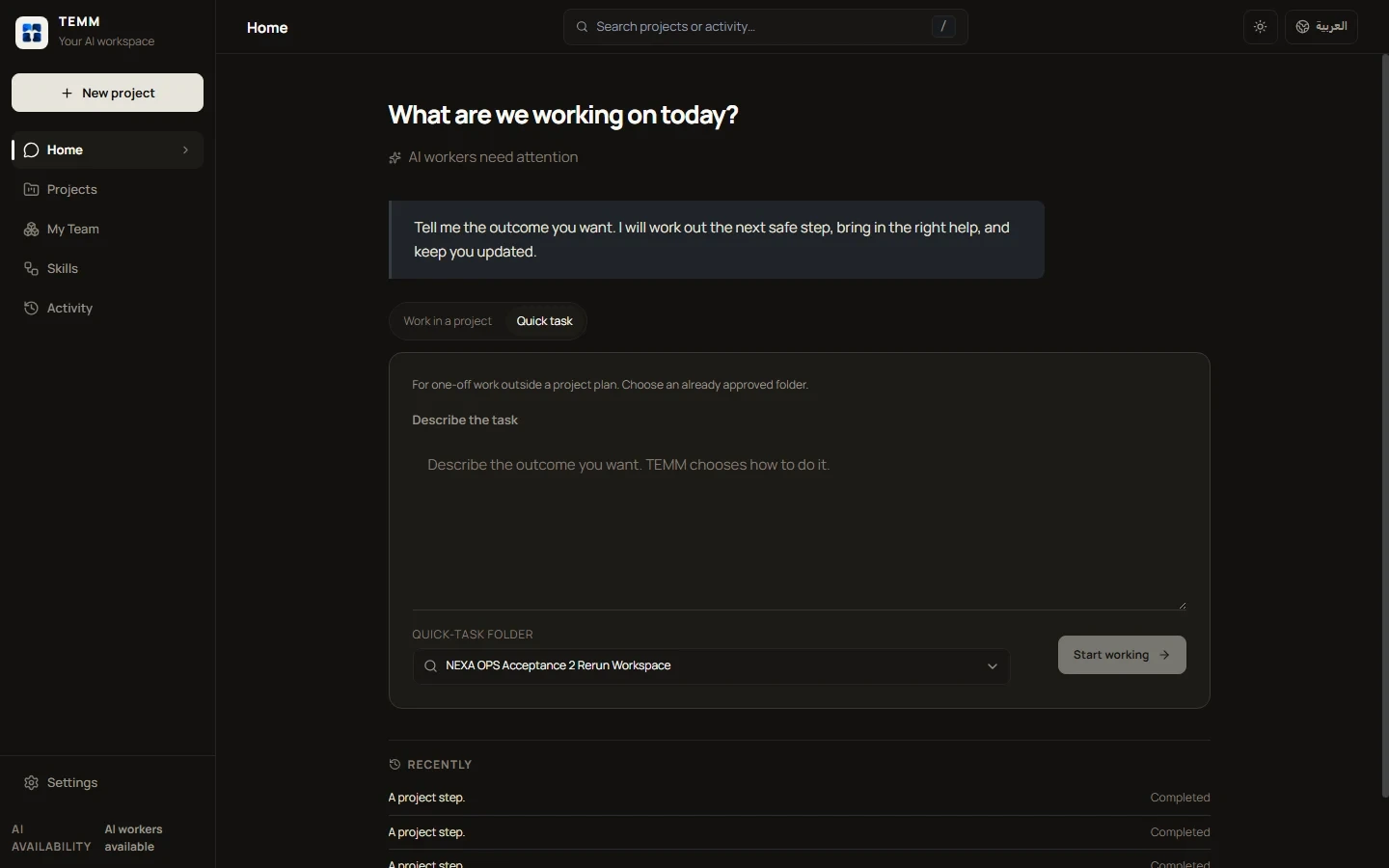
Workspace UI · Bilingual Light & Dark Desktop/Web
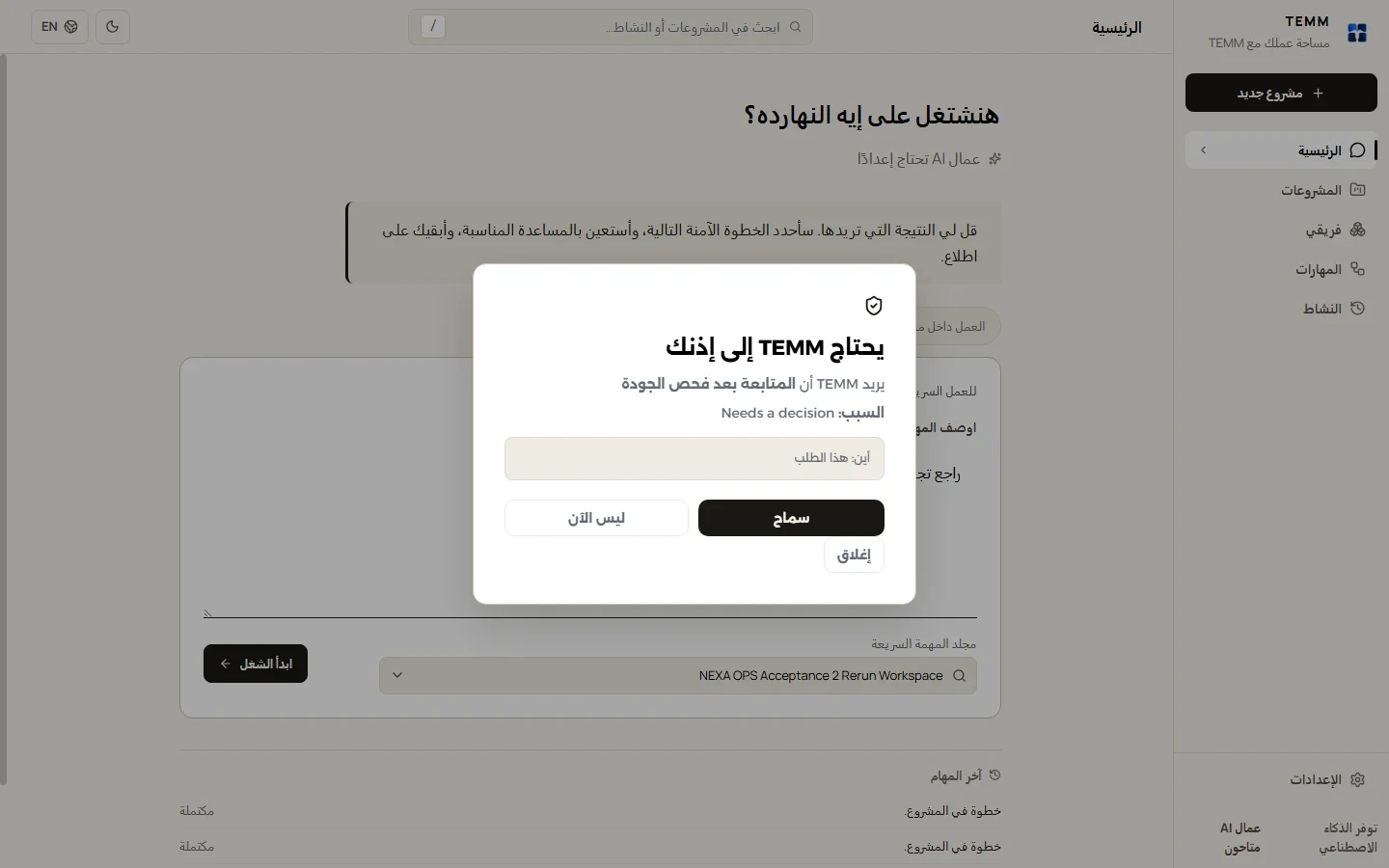
Bilingual AR/EN workspace for conversations, project plans & agent teams
- Home & Guided Conversation
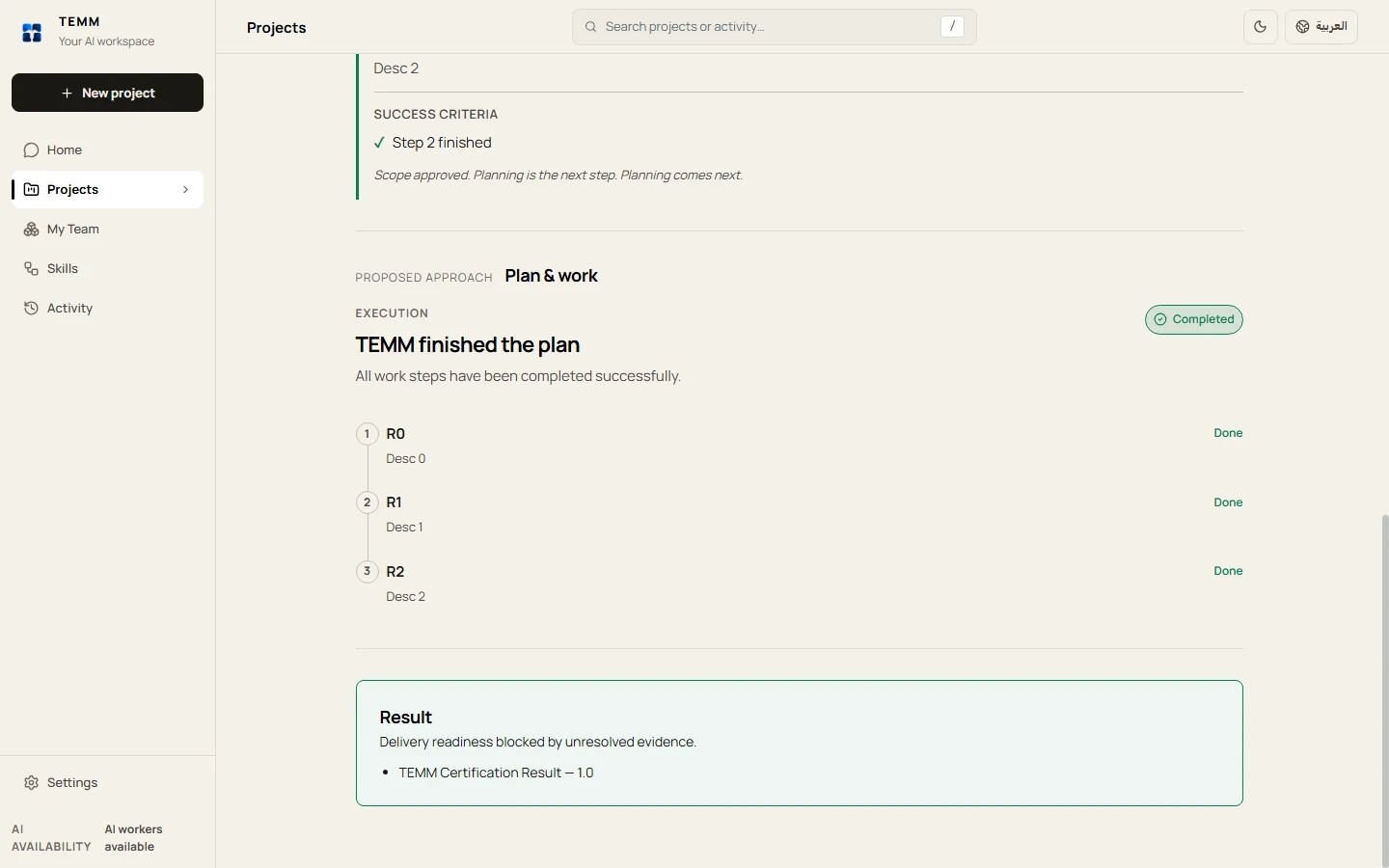
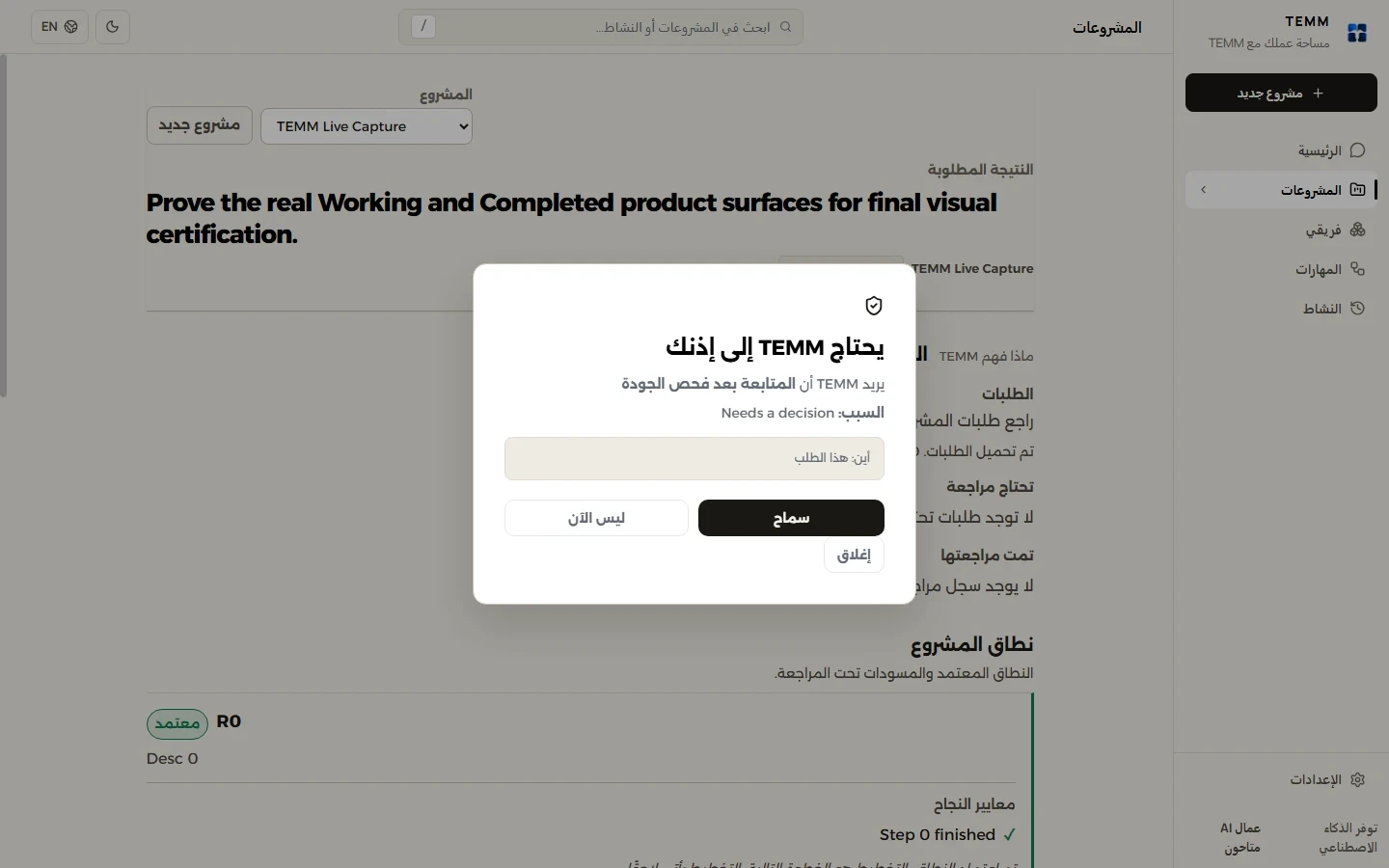
- Structured Project Scope & Plan
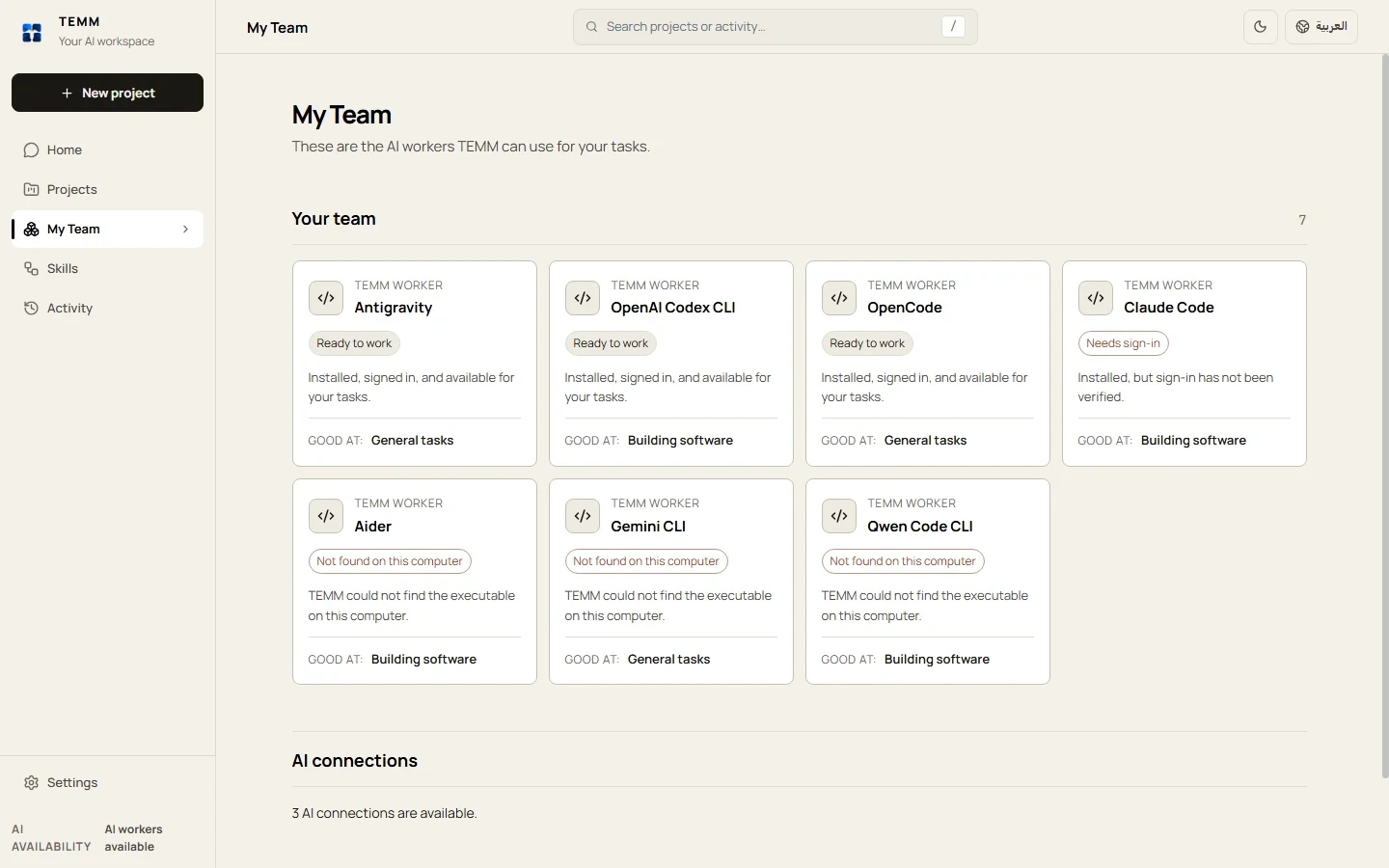
- My Team (Agent Fleet Status)
- Skills, Activity & Permission Prompts
Multi-Agent Orchestration Runtime · Python / FastAPI
Task routing, capability probing & human-in-the-loop approval gates
- Unified Agent Adapter Layer
- Approval Gate & Risk Classifier
- Evidence & Completion Verifier
- 282 Automated Test Files
Connected Coding Agents & Tooling
Local & cloud coding agent integrations
- Antigravity
- OpenAI Codex CLI
- Claude Code
- Gemini CLI · OpenCode · Aider
Data Model
Database schema & core tables
State model linking each project to its approved scope, execution steps, assigned agent worker, permission audit trail and verification evidence
| Table | Role in the system |
|---|---|
projects / project_scopes | Project definition, success criteria and scope approval state |
plan_steps / step_executions | Ordered execution steps, assigned AI worker and completion status |
agent_workers / skills | Connected AI agent fleet registry, health status and active skills |
permission_requests / delivery_receipts | Human approval prompts and evidence-verified delivery receipts |
Implementation
Key technical decisions
Separating scope & plan approval from autonomous execution
Instead of letting agents mutate files immediately, TEMM enforces a structured Scope → Plan → Execute pipeline with explicit success criteria
Evidence-gated completion receipts
A project cannot mark itself ready for delivery on text claims alone; the runtime blocks completion until all plan steps and verification evidence resolve
First-class Arabic (Thmanyah Sans) & English UI in light and dark modes
Designed a calm, human-First interface with native Arabic RTL typography (`Thmanyah Sans`) alongside English LTR in both light and dark themes
Security
Security & access control
- Explicit human-in-the-loop permission prompts before executing sensitive commands or external mutations
- Comprehensive activity log auditing every action taken by every connected AI agent
- 282 automated test files covering orchestration routing, permission gates and delivery verification
Code Highlight
TEMM delivery readiness & evidence gate
def evaluate_delivery_readiness(project: ProjectState) -> ReadinessReport:
    incomplete = [s.id for s in project.plan_steps if s.status != StepStatus.DONE]
    unresolved_evidence = [e for e in project.required_evidence if not e.verified]
    if incomplete or unresolved_evidence:
        return ReadinessReport(
            ready=False,
            reason="Delivery readiness blocked by unresolved evidence",
            missing_steps=incomplete,
        )
    return ReadinessReport(ready=True, receipt_id=generate_receipt_id(project))
Product Screens
System screenshots
Web & desktop interfaces
Summary
Outcome & status
Open-sourced on GitHub with 282 test files, coordinating six AI coding agents through a unified bilingual workspace